
School History
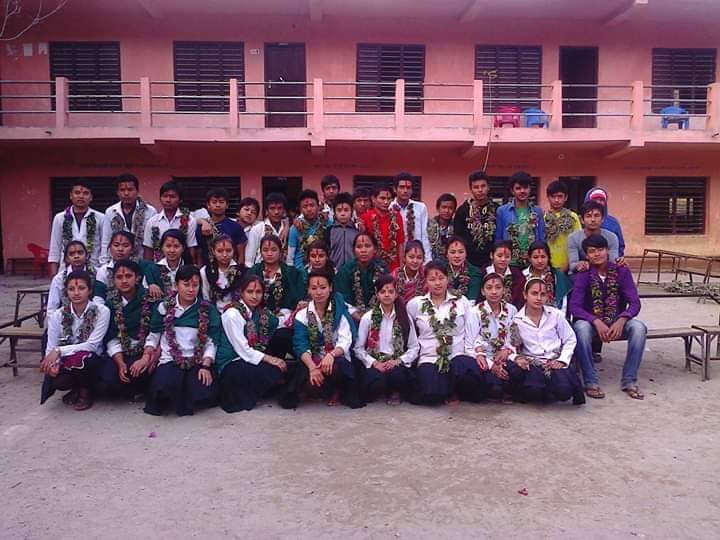
According to the current structure of Nepal, Shree Jivanoddhar secondary school is situated in the market area ward no-4, of Kaligandaki rural municipality, in far eastern part of Gulmi district under the province no – 5. It is also lied on the bank of Kaligandaki river and by the Radha Krishna temple . It is also known as the birth place of Eastern philosophy , religion and culture since ancient time. The school was established in the year of 2009 B.S. It was named from the goddess of knowledge, Saraswoti . It was first established as Shree Saraswoti Primary Paathsala under the chairmanship of the brother of Chiniyalal Shrestha with the active participation of this Purtighat bazar's resident educationist and social worker Bharatlal Shrestha was done . With the passage of time and under overcoming various breaking through various ups and downs of the time, the general Pauwa changed into Paathsala building was brought by a teacher from India named Girish Chandra Shreevastabh, who started teaching at first in this areas. He had a great contribution to bring the light for those people from darkness. Donors and founders were active in formalizing the work by getting permanent approval from the District Education Inspector as government permission was required. As this is the first school in the region, we have been conducting regular classes students from some parts of the region, including Jayakhani, Lamsarang, Phoksing, Khadgakot, Parbat and Baglung district directly benefited. Due to the hard work of teachers, the leadership role and efficiency of the founding management committees, the localization rules and the constant support and physical perfection of the school did not take long to increase. As a result of this school started receiving grants from the District Education Inspector's office as a government grant of Rs. 900, 1100, 1700, 2100, 2800 and 3100. As the overall cost of the school was very difficult to meet the salaries of the teachers. It was possible to cover the expenses by picking up items (millet, maize, paddy etc) from the home of the people and general public.
While the school was gaining momentum, when the teacher Girish Chandra left teaching and returned to home, the school had a problem . By solving problems, the leadership lead the school on the path of progress . The school started functioning with the arrival of Bom Bahadur Shrestha at the beginning of the 2015 academic session overcoming every problem and challenge,the leadership joined hands in an effort to raise the standard of the school. After collecting the required amount and keeping the deposit in the district, the name of school was changed to Shree Jeevanoddhar Middle School in the year of 2026 B.S. and permission was brought to run classes 6, 7 and 8with the full support of the locals. Accordingly, Tankanath Parajuli, a skilled academic from Parbat, was given the charge of the headmaster. As the educational activities of the school were very good, the students from thr locals as well as from the outlying districts started flocking to the school. In 2028 B.S. all the schools were nationalized in line with the concept of radical change in education policy by the government. As a result, qualified teachers have been required according to the number of schools and new teachers who have not been given permanent oppointments. Realizing the lack of building due to upgrading and upgrading of classrooms 12 rooms building was constructed with the financial material and moral support of the people.
Due to the extreme pressure of the students, a situation was created where teaching had to be done even by dividing the classrooms. The need to upgrade the school to the secondary level was felt in line with the positive thinking and public sentiment of all. Permissions was granted at the secondary level to conduct classes from the academic session of 3037 be depositing the required amount at rate of Rs. 90. By changing the house with in the village development committee. And classes 9 and 10 were conducted by managing teachers from private sources. After the operation of the secondary level Piskor Nepal provided significant assistance by appointing American citizen, Jefri Le Swartz as a free volunteer. This was an important opportunity for the region. There were various reasons for the increase in student pressure as well as the fact thatstudents from outside have been given a frequent fee waiver. Then Pradhan Panch and Deputy Prandhan Panch become more active in making the school permanent. In this context, according to the policy of making the school permanent by taking various preconditions, the school received permanent approval in the year 2040 B.S. Jawaharlal Shrestha succeeded in getting permanent approval. This gave the entire community,including the parents committee, an opportunity to feel some relief. Due to the service spirit of the teachers, the school was able to achieve 100% result in SLC. Then the headmaster, Shashi Bhandari even managed to get award. After that the school received 7 secondary teacher post. A comfortable environment was created for having subject teachers. Around the year 2050, the school began to feel difficult to bear the number students. So, the Gulmi Arghakhanchi Rural Development Project was planned with high demand for school buildings, toiletsand even more 40% amount had to be deposited immediately but wouldnot decide how to raise funds. However then committee member Mr. Rudranarayan Shrestha argued that the money should be deposited in the account by borrowing monety from the Village Development Committee and agreeing on a plan. Rudranarayan gave the full support by saying if school was unable to pay the money, he would himself pledge his house and farm and immediately went to the district headquarters to enrich the plan.
In the year 2055/56, it was decided to build a four room concrete building. A construction committee was formed under the chairmanship of Bhagawati Prasad Shrestha. The building was completed with great difficulty due to the dishonesty of the contractor. With the passage of time, the need for 10+2 began to be felt. The teachers discussed the issue of 10+2 internally and called a general meeting and unanimously decided to open. After completing the work of forming a financial committee under the coordination of Bhagawati Prasad Shrestha, collecting donations from house to house and submitting applications to the Higher Secondary Education Council. The Higher Secondary Council came into operation on 1st shrawan 2065 B.S. by depositing the amount and getting the legal connection.
Shree Jeevanoddhar Secondary School
Purtighat
Kali Gandaki Gaupalika-4
Phone: 9866856010 (Head Teacher)
Email: admin@jivanoddharmavi.edu.np
Contact
Copyright © Shree Jeevanoddhar Secondary School All rights reserved